YouTube AI Controversy: Why Experts Are Demanding a Ban on “AI Slop”
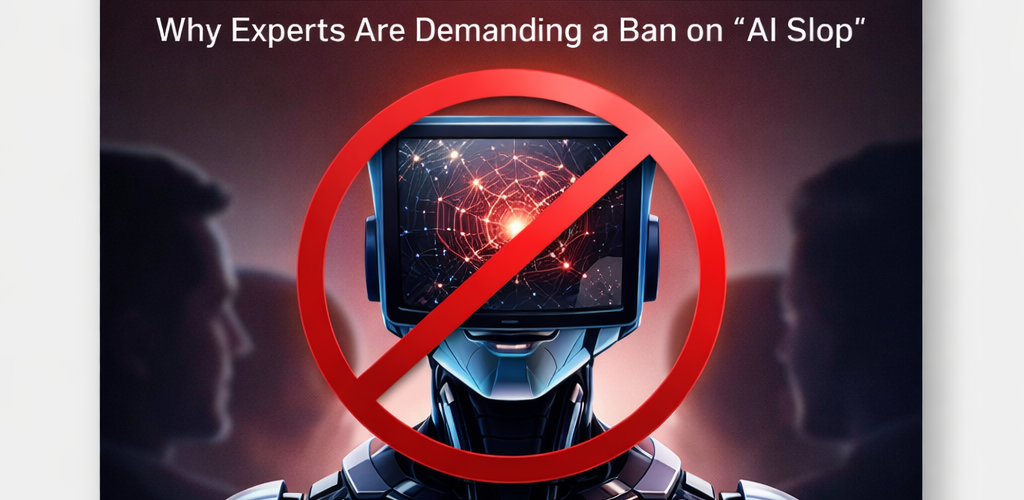
The “YouTube AI Controversy” is making news this week as experts warn about the impact of poor, machine made content on the newest generation. Here is the full report of what is going on and why it is important.
The “AI Slop” Crisis: What You Need to Know
The Big News
More than 200 Child development researchers (led by the nonprofit Fairplay), including bestselling authors like Jonathan Haidt (The Anxious Generation) as well as pediatricians and teachers’ unions have formally petitioned YouTube‘s owner Google to completely ban all AI “Made for Kids” content.
What is “AI Slop”?
“Slop” is the new term for cheap, mass-produced AI content. For kids, this usually looks like:
- Hypnotic visuals:Bright colors and rapidly-moving shapes with the intention of ‘gluing’ a child to the screen.
- Plotless stories: Random characters doing repetitive tasks with no real lesson or logic.
- Weird Errors: AI-generated videos often have “hallucinations”—like characters with six fingers, distorted faces, or floating objects that confuse a child’s sense of reality.
Why Experts are Worried
The petition contends that these videos are not merely “bad TV” they are actively damaging to a child‘s growing brain.
- Distorts reality: Truth and reality are still new concept to a toddler. Sitting watching an AI video and it defies the laws of physics the face looks a little “uncannny”, they have the perfect machine to distort reality.
- Cognitive Overload: This “dazzling” and rapid stream of content might be more difficult for a child‘s brain to absorb, and could interfere with concentration on life tasks later on.
- The “Addiction” Factor: These videos are frequently optimized using algorithms to force children to keep watching for hours. This practice is known as “toddler misinformation,” as it focuses on clicks and ad earnings rather than learning.
- The money trail: It has also emerged that certain creators are earning more than $4.25 million a year by spamming YouTube with these uninspired AI videos.
What the Experts are Demanding
The petition asks Google and YouTube to take five immediate steps:
- A Total Ban: Stop allowing AI-generated content on the “YouTube Kids” app.
- Clear Labels: Every AI video on the main YouTube site must have a giant, clear label (since many kids can’t read small “AI-generated” tags yet).
- The “Kill Switch”: Give parents a toggle in settings to completely hide all AI-generated content.
- Stop the Recommendations: Prevent the algorithm from suggesting AI videos to anyone under 18.
- End the Investment: Stop Google from spending money on developing AI tools specifically for children’s content.
YouTube’s Response
YouTube claims they already have “high standards” and only allow a small set of “high-quality” channels on the YouTube Kids app. They pointed out that they already require creators to disclose when they use realistic AI. However, critics say these rules are too weak because they rely on the creators to be honest, and many AI animations don’t currently trigger the mandatory labels.
Bottom Line: Experts believe children are being used as “guinea pigs” for AI content, and they want the “slop” cleared out before it does long-term damage to how kids learn and think.
Check out our resources!
- Bootstrap Templates: Explore our Bootstrap Projects section.
- Free E-Books: Download your Free E-Books here.