AI in Frontend Development: How AI is Transforming the Future of Web Design & Coding
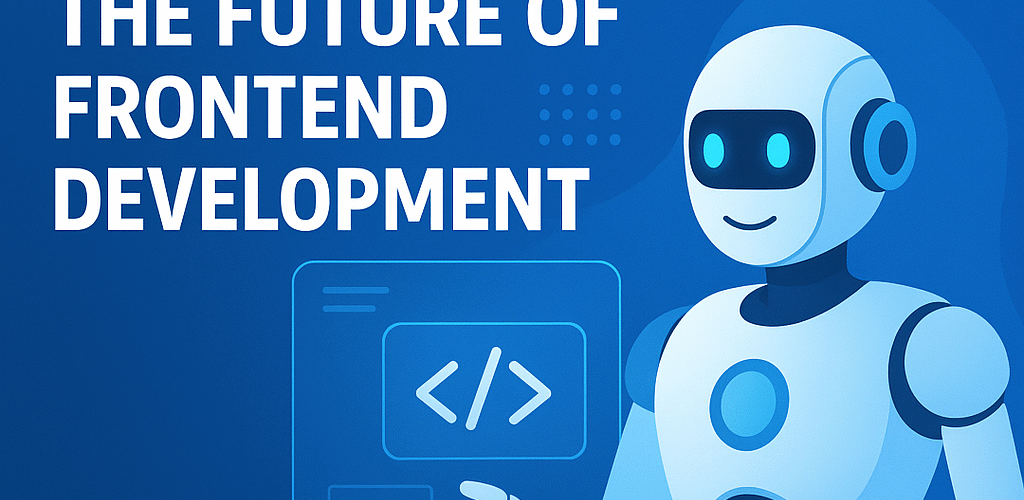
Artificial Intelligence (AI) is transforming the digital landscape faster than ever before—and frontend development is at the heart of this transformation. What began as simple automation tools has evolved into intelligent assistants capable of writing code, generating designs, optimizing performance, and even predicting user behavior. AI is not only simplifying complex tasks but also redefining how modern web experiences are created.
In this blog, we explore how AI is reshaping frontend development, the tools leading this change, and what the future may look like for developers.
1. AI-Assisted Coding: The New Development Companion
AI-powered coding assistants like GitHub Copilot, ChatGPT, CodeWhisperer, and Tabnine are becoming indispensable. These tools are trained on billions of lines of code, enabling them to:
- Generate HTML, CSS, JavaScript, and framework-based components
- Suggest real-time improvements
- Detect syntax and logic errors
- Convert designs or prompts into code
- Speed up repetitive coding tasks
Developers now spend less time debugging and more time building meaningful features. This shift increases productivity and allows teams to deliver high-quality products faster.
2. AI in Frontend Development for Better UI/UX Design
Designing user-friendly interfaces traditionally requires hours of brainstorming, prototyping, and testing. AI tools like Figma AI, Uizard, Galileo AI, and Midjourney now make this process smoother by:
- Auto-generating design components
- Suggesting color palettes and typography
- Creating responsive layouts instantly
- Turning text prompts into realistic UI mockups
- Analyzing user behavior to recommend layout changes
This transformation doesn’t eliminate designers—it empowers them to explore more creative possibilities with less manual workload.
3. Automated Testing & Debugging: Quality Assurance at Scale
Frontend testing—visual, functional, accessibility—can be time-consuming. AI testing tools such as Testim, Selenium AI, and Percy can now:
- Automatically detect UI inconsistencies
- Identify accessibility issues
- Predict bugs before they happen
- Run faster regression tests
- Learn from past bugs to improve future tests
These intelligent systems ensure stable deployments and reduce the risk of unexpected failures in production.
4. AI in Frontend Performance Optimization
Website speed is crucial for SEO, conversions, and overall user experience. AI-powered optimization tools can:
- Compress and optimize images
- Remove unused CSS and JavaScript
- Improve Core Web Vitals
- Auto-generate lazy-loading techniques
- Analyze and fix performance bottlenecks
Tools like PageSpeed AI, Nitropack, Vercel AI, and Cloudflare’s AI features help developers deliver blazing-fast web experiences with minimal manual effort.
5. Personalizing User Experience With AI in Frontend Development
Personalization has become a core part of successful digital experiences—and AI takes it to the next level. With real-time user data, AI can personalize:
- On-page content
- Product recommendations
- Navigation structure
- Themes and layouts
- Interactive behavior based on user preferences
This creates a highly tailored user experience, improving engagement and boosting conversion rates.
6. Conversational UI & Voice Interfaces
AI’s natural language processing (NLP) capabilities enable developers to integrate conversational interfaces directly into frontend apps. Chatbots and voice assistants powered by AI can:
- Guide users through a site
- Answer queries instantly
- Enhance accessibility for differently-abled users
- Improve customer service with automated responses
This trend is growing rapidly, making interfaces feel more human and interactive.
7. AI in Accessibility Improvements
Accessibility is a critical part of frontend development, and AI is playing a big role here. Tools using AI can:
- Generate alt text for images
- Detect low-contrast text
- Identify keyboard navigation issues
- Suggest ARIA attributes
- Help developers build WCAG-compliant interfaces
This ensures that websites are more inclusive and usable for everyone.
8. Will AI Replace Frontend Developers?
The short answer: No.
The long answer: AI will replace repetitive tasks, not creativity, logic, or human understanding.
Frontend developers bring:
- Creative design thinking
- Problem-solving skills
- Knowledge of user psychology
- Code architecture planning
- Brand and product understanding
AI cannot replicate these qualities.
Instead, it acts as a powerful assistant that boosts efficiency and reduces workload. The future developer will be a hybrid professional—someone who understands both coding and using AI tools effectively.
Conclusion: A Future Powered by AI & Human Creativity
AI is reshaping the future of frontend development through smarter coding, better design automation, improved testing, and highly personalized user experiences. Developers who embrace AI tools will build faster, smarter, and more efficiently than ever before.
The future is not about humans vs. AI—it’s about humans empowered by AI.