SQL vs NoSQL: Which One Should You Choose?
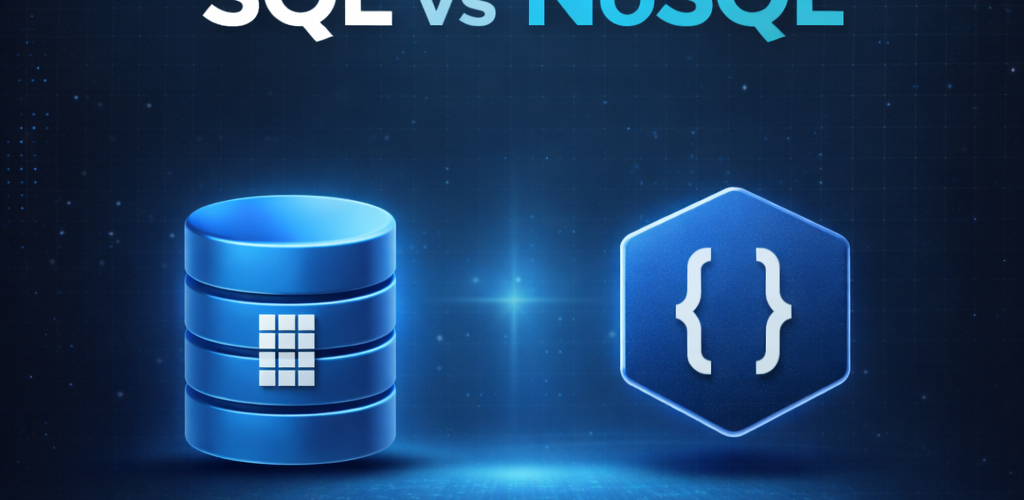
Choosing between SQL vs NoSQL databases is a common question for developers, startups, and anyone building a modern application. There is no universal winner. The right choice depends on what you are building, how your data looks, and how your application needs to scale.
This guide breaks it down in simple terms so you can make a confident decision.
What is SQL?
SQL databases are relational databases. They store data in tables with rows and columns, much like a spreadsheet. Each table follows a fixed structure called a schema.
Popular SQL databases include MySQL, PostgreSQL, SQL Server, and Oracle.
Key features of SQL databases
- Structured schema with predefined columns
- Strong relationships using primary and foreign keys
- Powerful querying using SQL language
- ACID compliance for data reliability
SQL works best when your data is structured and relationships matter.
What is NoSQL?
NoSQL databases are non relational databases. They store data in flexible formats like documents, key value pairs, wide columns, or graphs.
Popular NoSQL databases include MongoDB, Firebase, Cassandra, and Redis.
Key features of NoSQL databases
- Flexible or schema less data structure
- Designed for large scale and high traffic
- Easy horizontal scaling
- Optimized for speed and distributed systems
NoSQL is ideal when your data structure changes often or when you need to handle massive volumes of data.
Key differences between SQL and NoSQL
Data structure
SQL uses tables with fixed columns. NoSQL allows flexible data formats like JSON documents.
If your data has a clear structure, SQL is a natural fit. If your data varies from record to record, NoSQL is more comfortable.
Schema flexibility
SQL requires schema changes before storing new types of data. NoSQL lets you store different data shapes without altering the database structure.
This makes NoSQL attractive for fast moving projects and evolving products.
Scalability
SQL databases typically scale vertically by upgrading server resources. NoSQL databases are designed to scale horizontally across multiple servers.
For large scale applications with unpredictable growth, NoSQL often scales more easily.
Transactions and consistency
SQL databases are strong in data consistency and transactional integrity. This is critical for financial systems, bookings, and inventory management.
NoSQL systems often prioritize availability and speed, sometimes allowing eventual consistency.
Querying and joins
SQL excels at complex queries and joins across multiple tables. NoSQL usually avoids joins and stores related data together.
If your application relies on complex reporting, SQL is usually the better choice.
When should you choose SQL?
Choose SQL if:
- Your data is structured and relational
- You need strong data consistency
- You are building systems like banking, ecommerce, or admin panels
- You need complex queries and reporting
- You are using PHP, Laravel, or WordPress
For projects like exam paper systems, blogs, CMS platforms, and business dashboards, SQL is usually the best option.
SQL
When should you choose NoSQL?
Choose NoSQL if:
- Your data structure changes frequently
- You need to handle very large traffic or real time data
- You are building chat apps, analytics systems, or IoT platforms
- You want fast development with flexible data models
- You are working with microservices or distributed systems
NoSQL shines in modern web apps that prioritize speed and scalability.
Can you use both together?
Yes, and many real world systems do.
A common approach is:
- SQL for core business data like users and payments
- NoSQL for logs, analytics, caching, or real time features
Using the right tool for each job often gives the best results.
SQL vs NoSQL for beginners
If you are just starting out, SQL is usually the better first choice. It teaches you how data relationships work and builds a strong foundation.
Once you understand SQL well, learning NoSQL becomes much easier.
Final thoughts
The question is not which database is better. The real question is which database fits your project.
SQL is reliable, structured, and powerful for most traditional applications. NoSQL is flexible, fast, and designed for scale.
Understand your data, your traffic, and your future plans. When you do that, the right choice becomes clear.